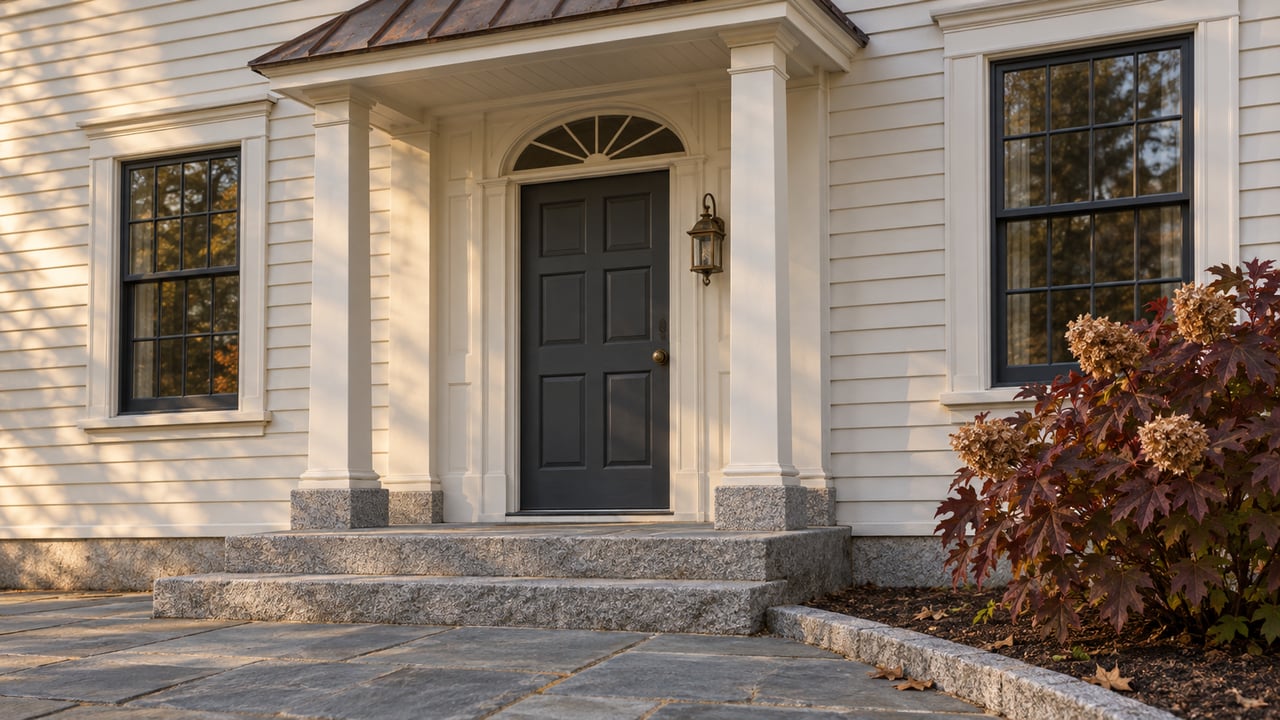
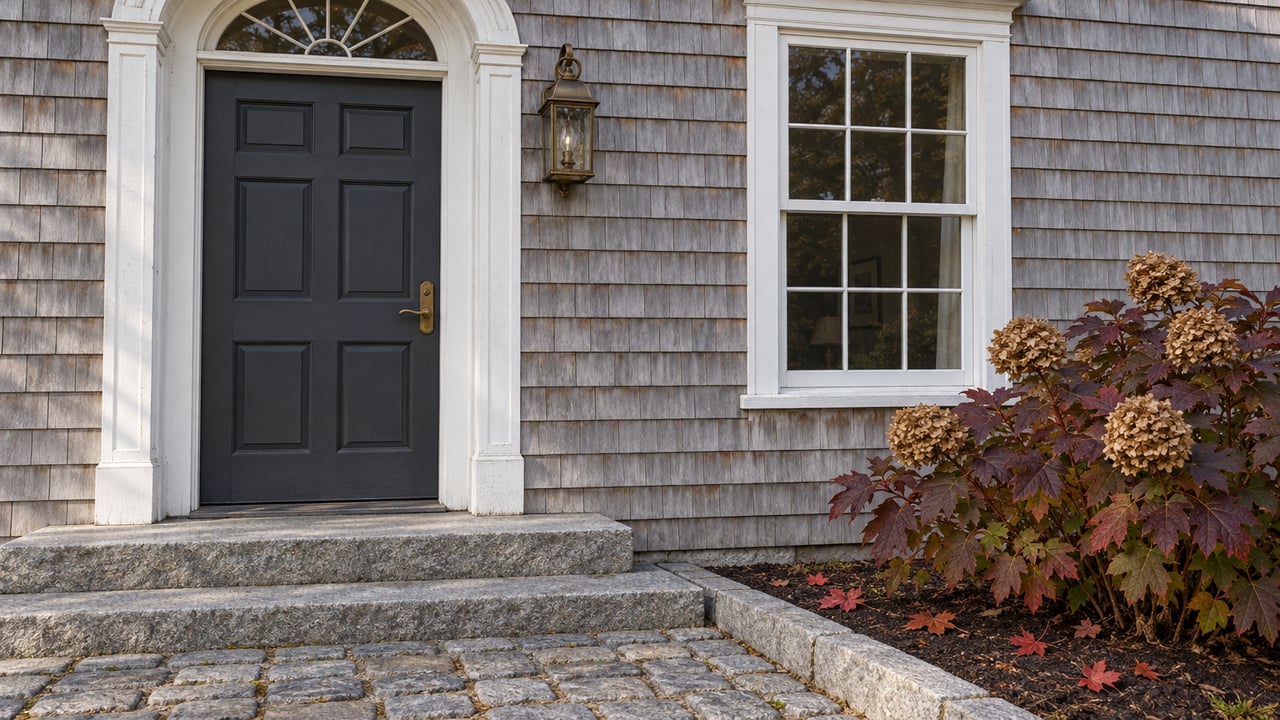
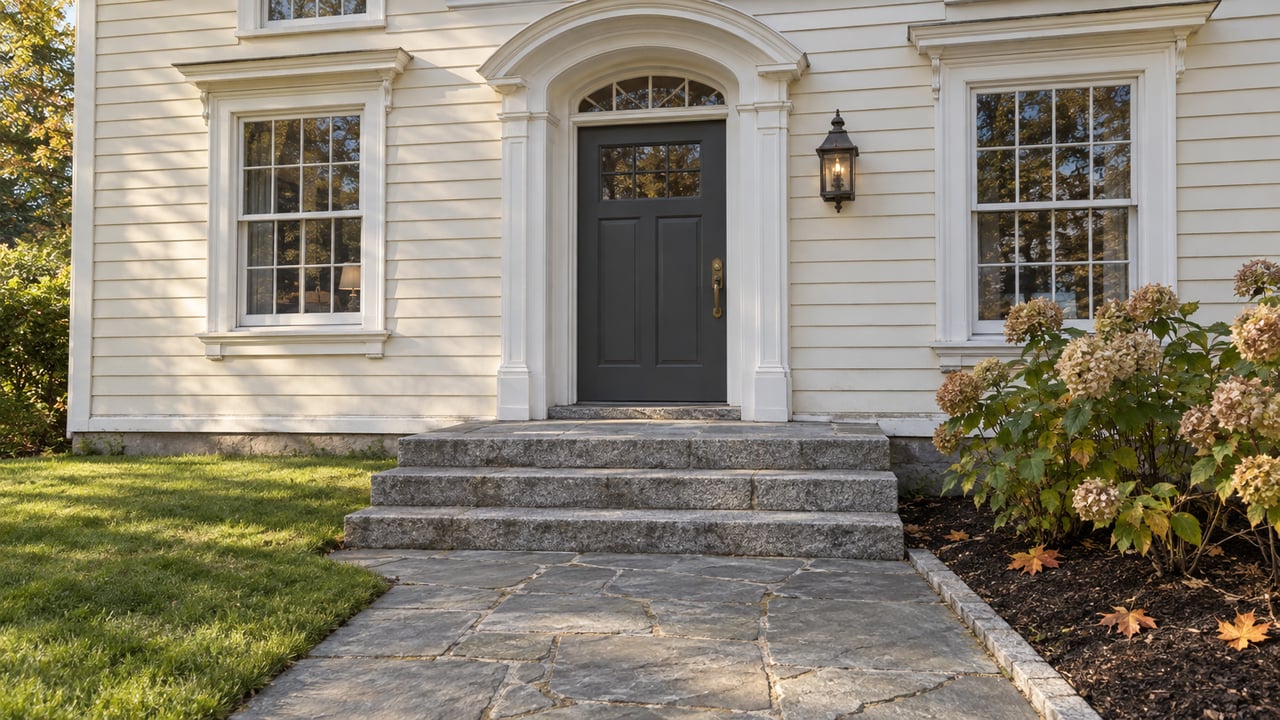
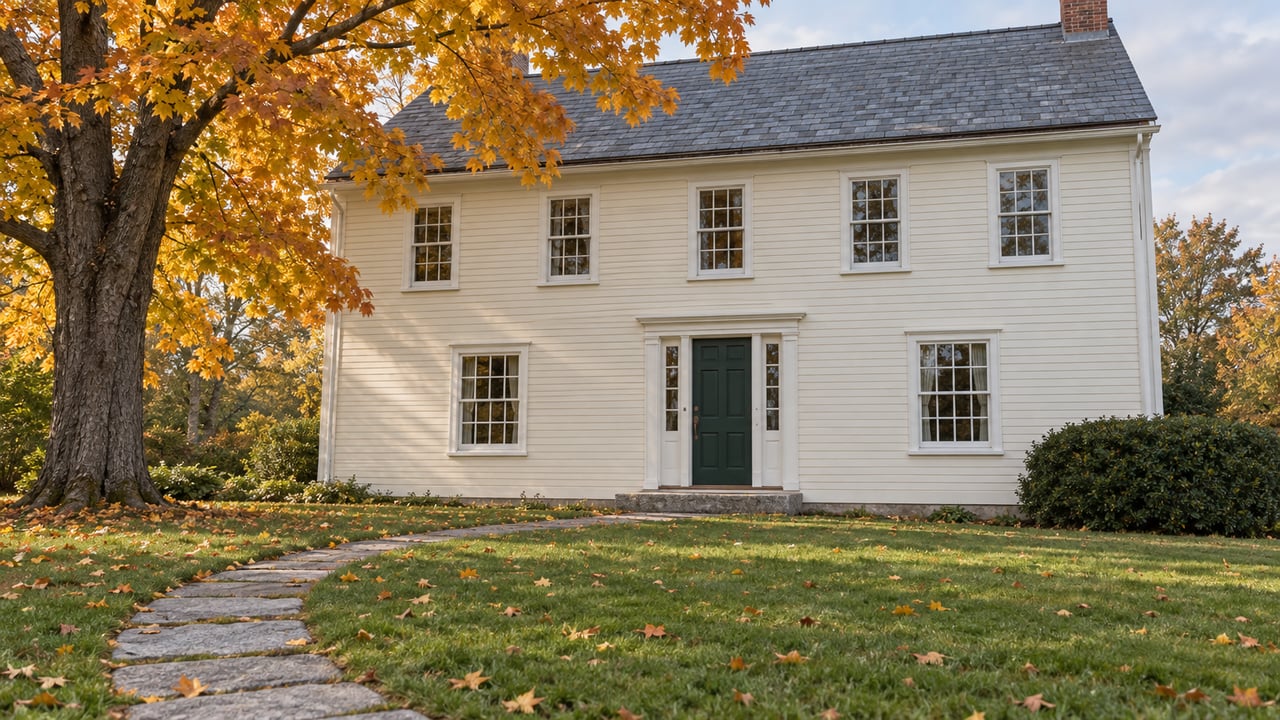
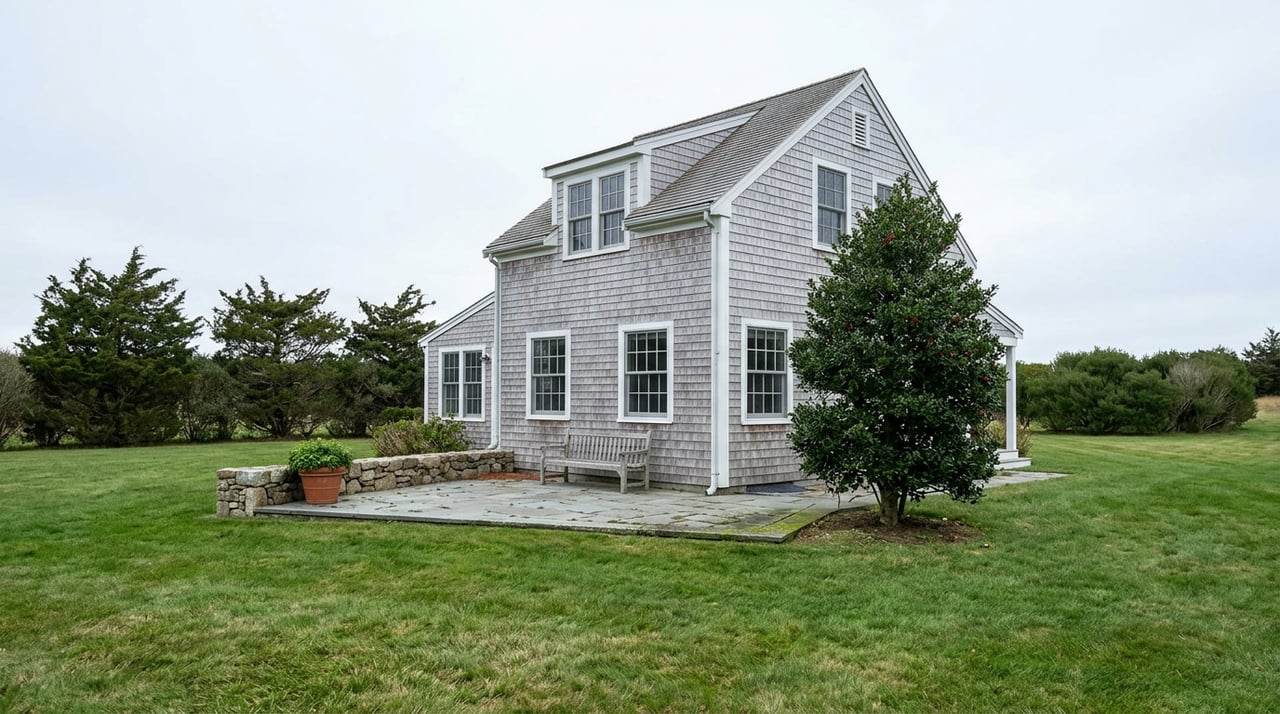
There are two houses on Laurel Drive built within a few years of each other, by architects working from the same set of ideas, on lots laid out by the same group of families in the 1950s. Their legal status is not apparent from the architecture.
That property-specific legal status is the single most consequential fact in pricing a Lincoln Modern house, and it does not appear in a square-footage comp, a tax card, or anything a buyer's agent will find on a listing sheet. Owners themselves are often unclear about it, and it is the first thing to establish before anyone talks about price.
The first call is to the town, not to an appraiser
Lincoln's commission page describes three separate bylaws, which govern different addresses.
Inside a local historic district. The Historic District Commission administers Lincoln's Historic District Bylaw under Massachusetts General Laws Chapter 40C. Within the districts, exterior alterations visible from a public way, new construction, and demolition all require review. According to The Lincoln Squirrel, Lincoln adopted the bylaw on March 28, 1981, and the district originally covered 73 properties across four non-contiguous areas: Lincoln Center, Woods End, Codman Farm, and Cory-Brown-Hunt on Conant Road.
Inside Brown's Wood. According to FoMA, at the March 2018 Town Meeting, owners of 28 Modern houses voluntarily brought their properties under district protection. Eleven of them formed an entirely new Brown's Wood Historic District, which carries additional provisions written in consultation with the neighborhood itself. The remaining houses were added as scattered, non-contiguous parcels throughout town.
Everywhere else. The Lincoln Historical Commission, a different body, administers the Demolition Delay Bylaw and a Neighborhood Conservation District Bylaw for structures outside the four historic districts. All three commissions meet jointly on the first Tuesday of the month, which is convenient for scheduling and confusing for anyone trying to figure out which one has jurisdiction over their house.
The word doing the heavy lifting in that middle paragraph is voluntarily. Participation in 2018 was house by house, owner by owner. Neighbors chose differently. A cohesive Modern enclave can contain protected houses and unprotected houses sitting across a shared driveway from one another, and the only reliable way to know which category an address falls into is to confirm it with the commissions directly. Do that before you set a price, not during the inspection period.
The distinction matters more than owners expect: historic-district review and demolition delay are not variations on a theme. The Massachusetts Historical Commission is blunt about the limits of the latter, noting in its own guidance that "demolition delay is only a delay," after which a building can legally come down.
What the layer actually does to the price
Here is where the intuition most sellers arrive with runs backward.
A Lincoln Modern house attracts two entirely distinct kinds of buyer. The first wants the land, the setting, and the two-acre zoning described in the town FAQ, and regards the existing structure as a cost of acquisition. The second wants a Bogner, a Hoover, a Koch, or a Pierce, and would consider replacing it an act of vandalism. Those two buyers value the same property through different arithmetic, and in a normal Lincoln transaction they bid against each other. That competition is what produces a strong number.
Chapter 40C review removes the first buyer from the table. It does not reduce what the house is worth to the second one. What it does is eliminate the floor underneath the price, because the land-value bid that would otherwise catch a poorly marketed listing simply is not there. A protected Modern house that fails to reach the style-motivated buyer does not fall back to land value. It sits.
The practical consequence is that district status raises the cost of a mediocre marketing campaign far more than it lowers the ceiling. Protection is not a premium and it is not a penalty. It is a narrowing of who can plausibly write the offer, and it shifts the entire burden of price realization onto presentation and reach.
Why price per square foot is the wrong instrument
Now apply that to the comp set.
More than 300 Modern residences were built in Lincoln between the late 1930s and the 1970s. Henry Hoover alone designed roughly 100 houses across his career, about 50 of them here, and completed the town's first Modern house in 1937, a year before Walter Gropius built on the land Helen Osborne Storrow provided on Baker Bridge Road. Marcel Breuer, Walter Bogner, and the Fords followed onto adjacent Woods End Road, which became part of the Historic District in 1981.
These are, by and large, not large houses. They are single-story and split-level, sited to rock and slope rather than to a street setback, and organized around glass. The Massachusetts Historical Commission's area inventory for Brown's Wood catalogs 12 Laurel Drive for its glass-walled entry, 41 Laurel Drive for a 1956 form with a 1969 A-frame carport, 1 Moccasin Hill as a prefabricated Techbuilt post-and-beam by Carl Koch, and 40 Laurel Drive for an early application of residential solar technology in a near-Brutalist envelope built from an unusual material.
Run any of those through a dollar-per-square-foot adjustment derived from a 4,000-square-foot colonial and you get a number that is wrong in both directions at once. It understates the land and the design, and it overstates the deficiency of a floor plan that was never trying to be that house. The honest comparison set is the 300-plus Modern houses in Lincoln itself and the regional enclaves the same buyers shop: Six Moon Hill, Five Fields, and Peacock Farm in Lexington, Snake Hill in Belmont, Conantum in Concord, Kendal Common in Weston. Brown's Wood exists at all because Ann and Ranny Gras had a solar house plan rejected at Kendal Common and went looking for a place to build it. They recruited through bulletin boards at MIT and classical radio spots starting in May 1953, incorporated in 1954, and reviewed each other's plans with a standing rule against colonials, capes, and ranches. According to the Lincoln Historical Society area inventory, roads went in just before Lincoln moved from one-acre to two-acre zoning.
The timing makes this expensive to get wrong
Statewide conditions are not doing sellers any favors right now. The Massachusetts median single-family price was $665,000 in May 2026, essentially unchanged year over year, on 3,990 sales, down half a percent. In Greater Boston the median single-family price was $833,750 that month, down 0.4 percent from a year earlier, according to The Warren Group. Looking at the full-year picture, The Boston Globe reported in April 2026 that while every Massachusetts community gained ground between 2020 and 2025, year-over-year medians dropped in 62 of the communities examined, with Lincoln named among the higher-priced towns where prices edged down from 2024 to 2025.
A flat market with a soft top end means buyers at this price point have time. General demand pressure will not rescue a listing. Whatever premium a rare house earns in 2026 has to come from finding the specific person who wants it.
The glass question now has a local answer
Every buyer asks it. What does it cost to heat a house that is mostly windows, and can anything be done without ruining it.
Until recently the honest answer was a shrug. It is now a documented one. From March 30 to April 30, 2026, the Friends of Modern Architecture/Lincoln and CFREE, the town's Carbon Free Residential, Everything Electric group, mounted a joint exhibit at the Lincoln Public Library Art Gallery titled Mid-Century to Next Century: Modern Houses and Sustainable Futures. It documented five Lincoln Modern houses retrofitted for efficiency, with narrative panels on how owners, architects, and builders made the calls, and large-format photography including Rick Mandelkorn's image of the 1940 Gaskell House. The organizing point was that the original signature features survived the work.
Lincoln's Historic District Bylaw itself contains a provision addressing energy-conserving and energy-producing devices, so the question of solar and mechanical upgrades inside a district is one the commission has already contemplated rather than one a buyer would be raising from scratch.
For a seller, this converts a defensive silence into a document. Assemble the retrofit record before listing: what was done, what it cost, what was preserved. A buyer who has to guess assumes the worst number.
Where these buyers actually come from
They are not driving Lincoln on a Sunday hoping something turns up.
FoMA has been building this audience since 2005 through house tours, lectures, symposia, screenings, and its annual Modernism Awards. A recent tour of a Bogner-designed house and studio ran $50 per person in groups of twelve, led by board members Matt Andersen-Miller and Woodie Arthur. Membership tiers include tour tickets, a Gropius pamphlet, a copy of Breaking Ground: Henry B. Hoover, New England Modern Architect, and at higher levels a guided drive-by of the town's Modern greatest hits. The Gropius House, a National Historic Landmark on five and a half acres owned by Historic New England, draws thousands of visitors a year from around the world.
That is the demand signal, and it is not local. Reaching it is a marketing decision, not a pricing one.
It also helps to remember what the architects were siting these houses into, because it has not gone anywhere. Codman Community Farms works more than 150 acres and twenty-plus fields with a store open year-round. At deCordova Sculpture Park and Museum, the outdoor exhibition Nature Sanctuary runs through October 4, 2026, with the Sculpture Park, café, and store open while the indoor galleries remain closed for building work. Admission is free to Lincoln residents. Buyers of these houses are buying that landscape as much as the structure on it.
Frequently asked questions
Does historic district status transfer when I sell? Yes. Chapter 40C designation runs with the property, not with the owner who agreed to it in 2018. Historic New England holds easements on the 1937 Hoover house and the 1963 Flansburgh house, and two Modern houses carry a Lincoln Rural Land Foundation conservation easement governing the building envelope.
My street has Modern houses in the district and some that are not. How do I find out which I am? Ask the commissions. The Lincoln Historical Commission, Historic District Commission, and Brown's Wood Historic District Commission meet jointly the first Tuesday of the month, and the town's commission page lists contact information. This is a records question with a definite answer, and it belongs in your pre-listing file.
Does district review mean a buyer can never change anything? No. The bylaw provides for certificates of nonapplicability covering ordinary maintenance and certificates of hardship in defined circumstances, and certain alterations are itemized as excluded from review altogether. Review applies to permanent exterior changes above grade and visible from a public way, plus new construction and demolition.
Is a smaller Modern house harder to sell than a larger colonial in Lincoln? It is sold differently. The buyer pool is narrower and more motivated, which means the marketing has to travel further to reach it and the presentation has to speak the language of the architecture rather than apologize for it.
If you own one of these houses, or you are trying to buy one, the pricing conversation should start with the paperwork and the buyer pool rather than with a square-foot multiplier. Hilary Bovey works with owners of architecturally significant homes across Lincoln and the surrounding towns, pairing design-led presentation with the reach of Coldwell Banker Global Luxury. Let's Connect.
This article is general information, not legal, tax or financial advice. Consult a qualified professional about your situation.